Why Coconut is so Important
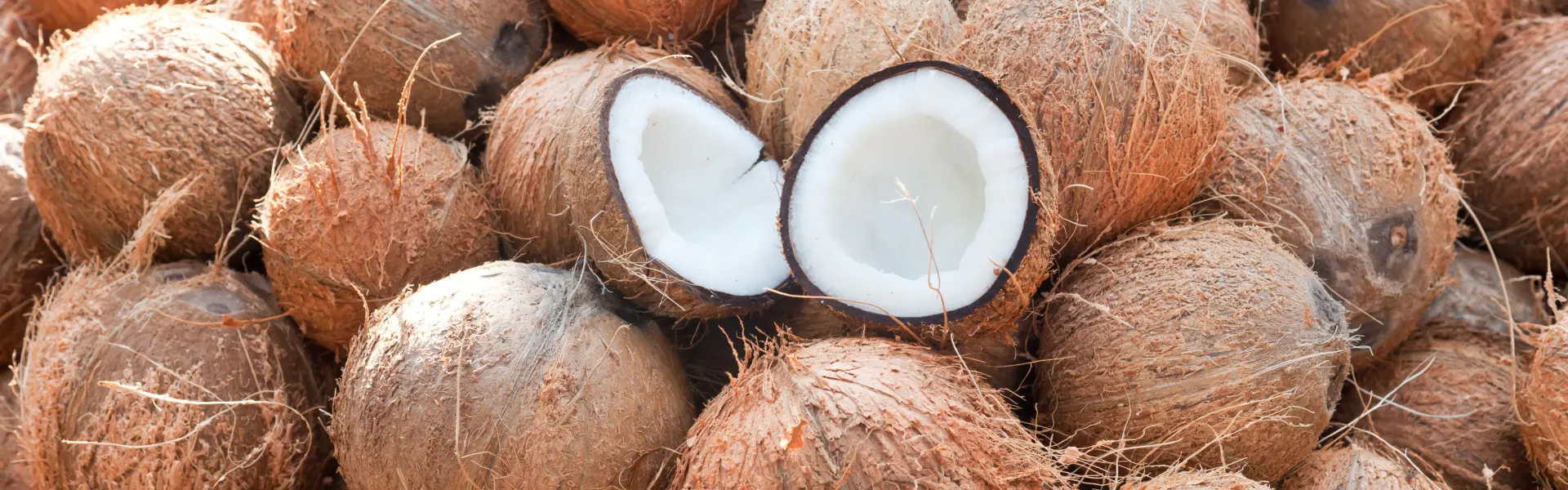
Coconut plays a vital role in the production of premium activated charcoal due to its unique natural properties and sustainable advantages. Among all biomass sources, coconut shells stand out as one of the most efficient and environmentally responsible raw materials for activated carbon manufacturing.
Superior Raw Material for Activated Charcoal
Coconut shells are extremely hard and dense, which allows them to produce activated charcoal with a high carbon content, exceptional micro-porosity, and large surface area. These characteristics are essential for effective adsorption, making coconut-based activated charcoal highly efficient at trapping contaminants such as chlorine, odors, volatile organic compounds (VOCs), chemicals, and fine impurities from water and air.
High Performance & Long Lifespan
Compared to other carbon sources, coconut-based activated charcoal delivers faster adsorption rates and longer service life. Its strong pore structure resists breakdown during use, ensuring consistent performance over extended periods. This makes it ideal for applications in water purification, air filtration, food and beverage processing, medical use, and industrial filtration systems.
Sustainable & Renewable Choice
Coconut shells are an agricultural by-product, meaning they do not require cutting down trees or depleting forests. By converting waste into a high-value filtration material, coconut-based activated charcoal supports a circular economy and significantly reduces environmental impact. It is renewable, biodegradable, and cleaner to process than many alternative raw materials.
Naturally Clean & Eco-Friendly
Coconut-based activated charcoal contains low ash and low metal content, resulting in a naturally cleaner product. This purity is especially important for drinking water, air purification, and food-grade applications. Its production process also generates fewer harmful emissions, supporting eco-conscious manufacturing standards.
Supporting Local Communities
The coconut industry provides livelihoods for millions of farmers and small-scale producers. Using coconut shells for activated charcoal adds value to local agriculture, supports rural economies, and promotes sustainable development in coconut-growing regions.
Essential for the Future of Filtration
With growing global demand for clean water, pure air, and environmentally responsible solutions, coconut-based activated charcoal is not just an option – it is essential. Its performance, sustainability, and social impact make coconut one of the most important natural resources in modern filtration technology.